
|
The Pyramid & Eye in National TreasureAlthough it's the main marketing image for the film, the pyramid & eye plays more of a background role in the plot where it appears a few times.
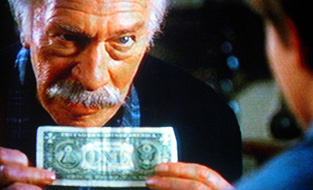
Grandfather tells young Ben the legend that Freemasons and Knights Templars gave us clues to their treasure using the symbols on the reverse side of the Great Seal. Later, in adult Ben's kitchen we see a poster of the dollar bill. (True. Someone is speaking to us. But it's the Founding Fathers communicating their vision of America.)
At the film's climax beneath Trinity Church, Ben sees the all-seeing eye all the bad guys didn't see. On the floor beneath it is a pyramid and eye button that opens the door to an empty treasure room where the movie's first clue (Charlotte's pipe) becomes the key that unlocks the actual treasure trove. In the fab treasure is the same pyramid & eye medallion seen at the beginning of the film when the Crusaders first find the treasure in Jerusalem. This medallion is a Hollywood prop.
Although National Treasure reinforces masonic myths about the Great Seal (and highlights its association with money), the film itself is an entertaining manifestation of America's true national treasure, the creative genius of her people. It is great filmmaking: a huge technological, logistic, and artistic collaboration of several hundred talented professionals. |



 Fictional Medallion